Carolyn Stevenson
Harvard-Trained Individual & Couples Therapist in Durham, NC
For over twenty years, I’ve sat with people in the aftermath of loss, in the middle of what has been tangled for a long time, and at the edge of changes they cannot yet name.

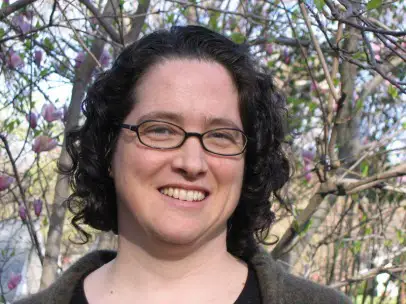
Depending on what’s needed, my work with individuals and couples might lean on practical tools, sustained conversation, or just the relief of a warm, unhurried space. My office, washed with light and lined with books, is in Durham; I meet with people across the Triangle — Chapel Hill, Hillsborough, Raleigh — as well as online throughout North Carolina.
Therapy for Anxiety, Grief, and Relationships in Durham — and the Whole of a Life
I work with a range of issues, including
- anxiety that won't let up,
- depression that flattens the days,
- relationships stuck in the same loops,
- grief that lingers long after loss,
- life transitions that rewrite the map,
- the inherited and unfolding stories of identity, culture, and belonging,
- LGBTQ+ lives and relationships making room for love, desire, and a life that feels one’s own,
- well-being and self-understanding when nothing is exactly wrong, but more of life seems possible,
- the restless search for meaning, even in a good life.
In all of these, we attend to the whole complexity of being human. It isn’t only about symptoms or labels, but about how life actually feels in the day-to-day. The work is to name what presses most and to make more room around it.
Depth-Oriented Therapy: A Certain Kind of Attention
There is a particular kind of change that becomes possible when two people give sustained, honest attention to what matters most. Often it begins quietly: a truth spoken aloud, a pattern named, something unexpected taking shape in the conversation.
That process isn’t all solemn. With compassion and humor, we’ll follow both the pressing questions that brought you here and the quieter currents underneath them. Sometimes the work is tracing the private logic that’s been steering your choices for years; other times, it’s just noticing how a stray thought can rearrange an afternoon. There can be laughter as well as insight, relief alongside recognition.
And there is the pleasure of an absorbing conversation: the chance to think deeply about your own life, to follow an idea where it leads, and perhaps to inhabit that life more fully.
An Integrative Approach: Ways of Listening
Therapy, as I see it, is responsive: it develops around the person and the questions in front of us. I draw from several traditions, but none determines in advance what the work should be. Each offers a different way of listening and responding.
Psychoanalytic and relational psychotherapy attends to unconscious patterns, desire, and what takes shape between us. Jungian and depth-oriented psychotherapy makes room for dreams, images, meaning, and unlived possibilities.
Cognitive behavioral therapy (CBT) offers practical ways to map patterns and experiment with alternatives. Mindfulness and meditation can help us meet experience with greater awareness and choice. Narrative therapy explores how personal, family, and cultural stories shape what feels possible.
Depending on what emerges, we might trace a pattern’s history, try a practical experiment, stay with an image or feeling, or examine how a problem has narrowed the story available to you. I shape the work around your needs, history, and particularity, allowing the emphasis to change as the work unfolds. You can read more about how I work and the approaches I draw from.
Couples Therapy: Slowing the Cycle Down
Couples therapy is never a single formula. The work is integrative, drawing from different traditions depending on what the relationship calls for. Sometimes it’s Emotionally Focused Therapy (EFT) — slowing conflict down enough to see the patterns of pursuit and withdrawal, anger and retreat, that leave both partners stranded. Sometimes it’s the tools of Imago Therapy, helping couples hear the echoes of earlier wounds in the arguments they keep circling. The Gottman approach, with its practical ways of de-escalating conflict and building steadier communication, can also be useful when partners need something concrete to hold onto. And when one person isn’t sure they want to stay, Discernment Counseling creates a short-term space to pause and sort through the options — to step out of the cycle of arguing and avoidance, and to consider honestly whether the next chapter is about repair, renewal, or separation.
Rather than pushing you toward one outcome, my role is to help you see the cycles you’re caught in and to open the possibility of choosing differently — whether that means repair, renewal, or, at times, a thoughtful separation.
A Room in Durham — Washed with Light, Lined with Books
My practice is for people who value privacy and depth. The work unfolds in unhurried conversation, allowing the drift of thought to take its course. Out of that openness can come something quite practical: ways of thinking, choosing, and acting fitted to the life at hand. And sometimes, along the way, there is the unexpected relief of speaking freely to someone who listens.
Online Therapy Across North Carolina
I work with people across North Carolina — in the Triangle (Durham, Chapel Hill, Raleigh) and beyond: Charlotte, Winston-Salem, Wilmington, Asheville. Whether in person or online, the work is the same: unhurried, attentive, carried with depth.
Harvard, Smith, and the Questions That Press on a Life
My graduate education began at Harvard Divinity School, where I studied theology and the questions that press upon a life. I later trained in clinical practice at Smith College and completed a two-year clinical fellowship at Harvard University. That education—existential as well as clinical—continues to shape how I listen and how I understand the lives brought into the room: lives searching for significance and pressed by the stubborn demands of daily life. The work of therapy, as I see it, is to make room for both—the hunger for meaning and the necessity of finding ways to live.
What Former Clients Say
“I had not realized that I was sleepwalking; I had not hoped for transformation.”
“She achieves a good balance between listening to my stories and giving me feedback… she remembers the threads of our conversations even after a long time between sessions.”
“My situation didn’t change, but with Carolyn’s help, I did.”
- shared by former clients. Read more testimonials
Serving Durham · Chapel Hill · Raleigh · Hillsborough · Online across North Carolina